
|
Check out our new audio content!
Getting your Trinity Audio player ready...
|
By Paul Wilkins
WHY PROBATE?
1) PROBATE IS APPLICABLE EVERYWHERE
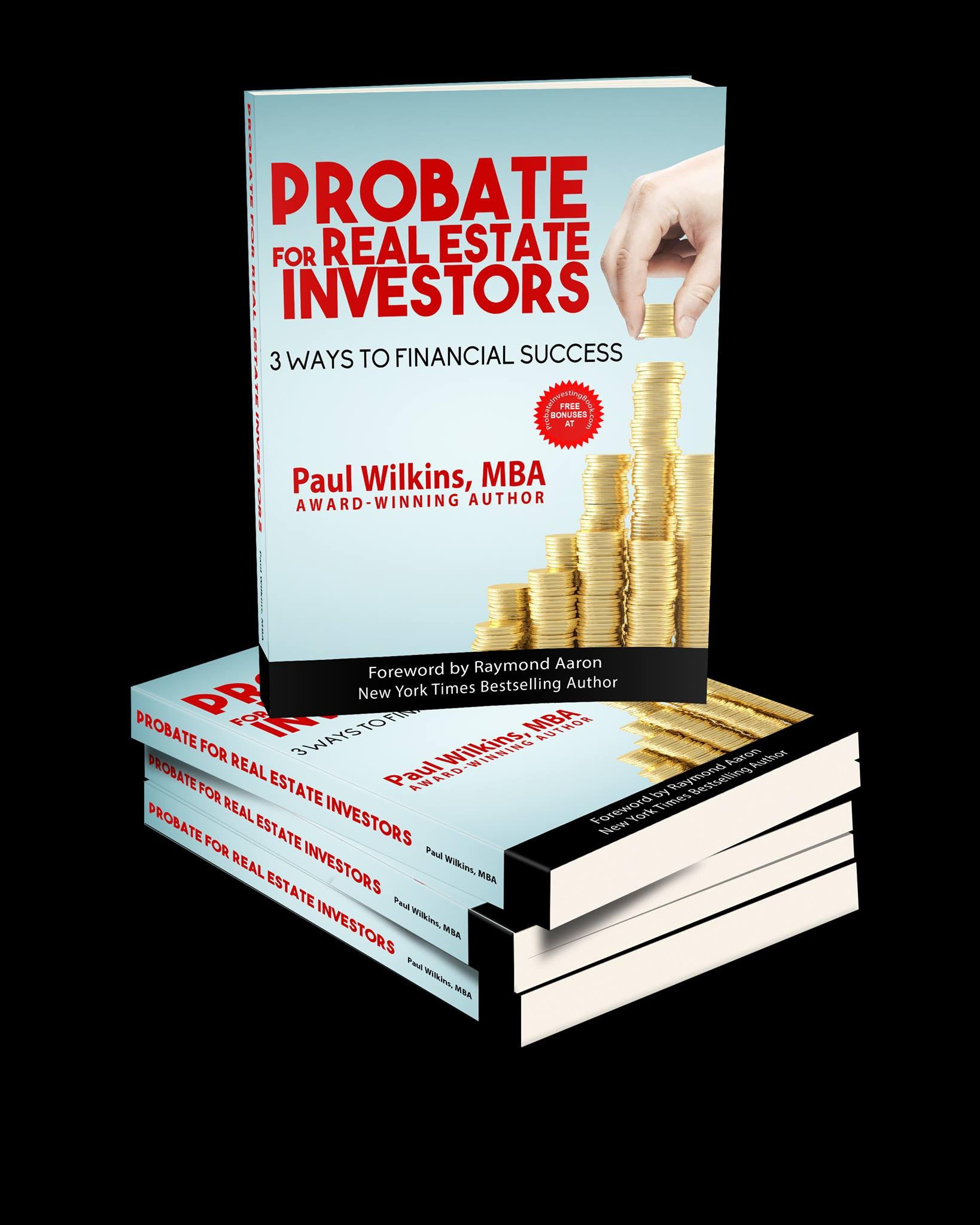
“In this world, nothing can be said to be certain, except death and taxes,” is one of many quotes of wisdom spoken by one of our nation’s founding fathers, Benjamin Franklin. While there are many resources to assist you with your taxes, this book will assist real estate investors with the subject of how probate can present profitable opportunities. Despite the forethought of many individuals who prepare wills, any real property held outside of a trust will be subject to probate. What is probate? Simply stated, probate is the legal process by which assets are transferred from the deceased owner to his or her heirs. Many people assume incorrectly that the existence of a will precludes the need for probate. Unfortunately, that is incorrect, at least in California, and throughout most of the United States.
Now for some good news for investors! Thanks to the probate process, there is a constant and steady stream of millions of prospective investment properties going through probate each and every year throughout the United States. Wherever people live and die, there will be probates, period. Since people die in all 50 states, and in every nation on earth, there will be countless millions of properties always available for resale. In 2016, the most recent year for which data is available, the U.S. Center for Disease Control tallied 2,744,248 deaths across the nation.

Good estate planners can often assist their clients to avoid probate through the use of a trust. However, a trust is not necessarily a perfect defense to dodge probate. If the trust document is lost, or if there are significant disputes concerning the trust after the death or incapacity of the trust settlor (the person who establishes the trust), these matters will end up in probate court—the venue that the trust settlor hoped to avoid in the first place.
2) PROBATE IS APPLICABLE IN ALL MARKET CYCLES
One of the benefits of investing in probate properties is that this niche never becomes out of vogue. When I first became seriously involved personally in real estate investing, just after the financial crisis of 2007–08, there were millions of REO (Real Estate Owned, the euphemism for bank foreclosed properties) homes on the market. However, there were many fewer real estate investors at that time, because most people were scared, and could not see the bottom of the market. Those of us who were seasoned real estate professionals saw just how low the market had dropped, and then began buying at a frenzied pace. By approximately 2010–11, the supply of REOs was dwindling rapidly, and dropped even further, as the big Wall Street investors also dove into the market, and purchased tens of thousands of homes, primarily in the Sun Belt states.

Another investment niche that was in favor shortly after the financial crisis of 2008 was short- sales. Short-sales occurred when property values fell below the previous appraised levels, and could not be sold for a sufficiently high price to pay the existing loan in full. The homeowners, in many of these cases, lacked the liquidity to cover this negative spread between the deflated property value and loan balance, and so these borrowers were compelled to request that their respective lenders approve the sale for less than the outstanding loan balance—ergo the nickname, short sale. Real estate agents, who had seen their livelihoods negatively impacted by the suddenly stifled real estate market, were now assisted by a cottage industry of small firms, which specialized in making short-sales happen for a few years.
This investment sector quickly faded into the sunset once the U.S. Justice Department and other federal and state agencies extracted billions of dollars in concessions from the major money center banks (i.e. Wells Fargo, Bank of America, JP Morgan Chase, Citibank, et al) for their alleged abuses and mismanagement of real estate borrowers during the financial crisis. Instead of paying the U.S. and state governments these multi-billion dollar settlements in cash, the majority of these payments were provided to homeowners via credits given to those individuals who were delinquent or in foreclosure. These credits allowed the banks to either reduce interest rates and/or loan balances, or defer loan payments to the end of the loan. The combination of these remedies provided qualified homeowners with some form of loan relief. This action almost immediately eliminated the need or necessity of the banks to approve short-sales, as now the banks were required to spend these concessions on their existing customers who needed assistance. Rather than approve a short-sale and see that loan—that potential stream of income—disappear forever, the new incentives for loan modifications enabled the banks to eventually recapture their lost income via these recast loans. The modified loans would be less profitable than those they replaced, but these loans were once again profitable and still on the books. Whereas REOs and short-sales have come and gone, probate opportunities remain.

3) NO EXPERIENCE IS NECESSARY
I have earned my livelihood over the past 20+ years as a result of probate transactions. When I first started in the business, I literally knew nothing about probate. Now, after nearly 23 years of 6 and 7-day work weeks of experience, you, my reader, will gain much of this knowledge throughout the lessons in this book. I interact daily with numerous probate attorneys and paralegals in California and many other states. Their information and assistance has added value to my knowledge, to become your knowledge! I learn something new every single day—not because I don’t know much, but rather because there is so much information in each state’s Probate Code, local court rules, and so forth.
The purpose of this book is to provide you with all of the basic requisite information to succeed in probate investing, without spending the next 20+ years that I have already invested in the field. I sincerely want you to achieve financial success, as many of my previous students have. My hope is that I can assist you achieve monetary success in the near future, and possibly work together with you in future financially rewarding transactions, too!

4) AN ENDLESS SOURCE OF LEADS
Unfortunately, people are always dying. Thus, there will always be an endless source of probate leads. For example, let’s say that you wanted to work only Los Angeles County for prospects. If, for some currently inexplicable reason that probate leads or investment opportunities were to dry up in Los Angeles County, you then could switch your efforts to an adjacent county, be it Orange, San Bernardino, or possibly Riverside Counties. Again, even if one county were to become temporarily unproductive, there would be no reason that other adjacent or nearby counties would be so afflicted.
Should an entire state become less or totally unproductive (say there were some significant changes to the probate laws), you could move your efforts or pursuits to another nearby state. Personally, Arizona has provided me several probate investment opportunities over the past few years. The point remains that you will never get tired or bored while pursuing probate leads, as these wells will never completely run dry.

5) LOW COST TO RESEARCH
Throughout this book, I refer to the probate laws and procedures in the state of California for the basis of the information provided herein. Since 49 of the 50 states base their laws on English Common Law (Louisiana, based on French Law, being the only exception), I assume that the probate codes and practices in most other states are parallel to each other. Over the years in my finance business, that has certainly been true. There are many more similarities than differences between the English Common Law states in the United States.
Chapter Four provides detailed information regarding the understanding and research of probate cases. Suffice it to say, once you understand the process, you should be able to review and extract the requisite information for each case, in 5 minutes or less. At this rate, you can easily gather 10–12 probate cases, your new leads, per hour. This is true whether the research is done at the court itself or online. As part of your initial probate education, you may want to do the research yourself. However, once you have mastered this skill, you will want to hire an assistant to gather this data for you. If you pay this assistant $10–$12 per hour, your cost per lead is roughly $1. This is very affordable, especially since this is proprietary information that you are not sharing with anyone else. Other real estate investing niches, such as foreclosure and bankruptcies, may provide database subscriptions at a lower price per lead, but that information is sold to 50–100 investors each time, and possibly more. The value of your probate data, at $1 per lead, can and will be proven valuable over time. Since your probate competition is minimal, your results should be very cost-effective when compared to other investors who rely on this aforementioned shared information.

6) LOW COST TO IMPLEMENT
Successful probate investing has a low cost of entry. As discussed in the last section, the cost of a qualified lead should be around $1. Once this information is in hand, the only additional cost is the amount of a postage stamp. No costly software or monthly subscriptions are necessary for probate investing, unlike other investing niches. Sometimes the cost can even be less than a postage stamp. A few courts list phone numbers on the basic probate forms. I had some students who once found the phone number for the administrator of an estate during the course of their research. They took the initiative and called the administrator. In less than 10 days, they had the estate property under contract, and within 30 more days, they received a wholesale fee of $18,000! This transaction will be discussed in more detail, later in the book. For the cost of a few phone calls, these students did quite well—especially since they put up $0 to secure the deal.
CONCLUSION
Probate is a profitable investment niche that can be pursued everywhere. As people are consistently dying, there will always be probate estates, with most estates having real property for sale. You need no experience to start, as this book will provide you with the required knowledge to succeed. There is an endless stream of leads, with minimal research costs, and nominal costs to start your career as a probate investor.
Want to know who the significant people are in probate? Read on!
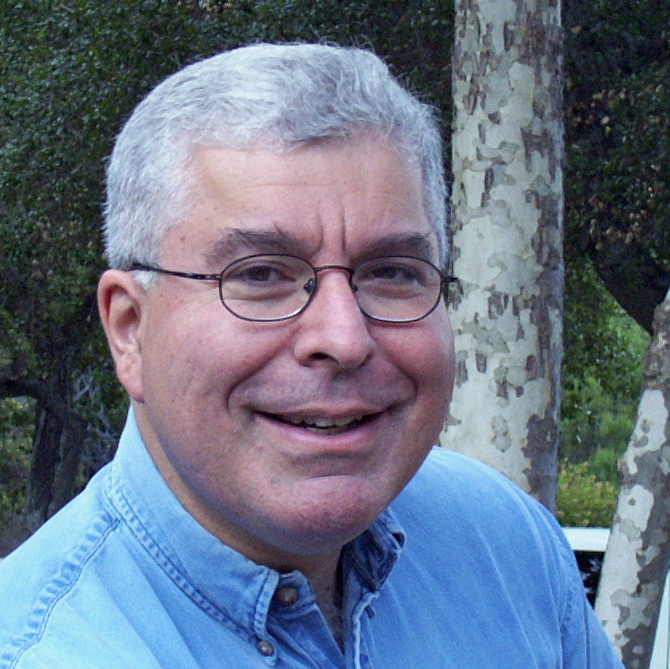
Paul Wilkins
Paul Wilkins was born and raised in Los Angeles, California, and attended the University of California, Los Angeles, where he earned a BA in History, magna cum laude. He went on to earn an MA in Latin American History, at UCLA, after which his career goals changed. He finished his formal education by earning an MBA in Finance and Accounting, at UCLA’s Anderson School of Management.
After graduation, he worked for several commercial banks and mortgage companies, eventually beginning in the probate business at National Consumer’s Finance, in 1996. He has remained working in probate since then, moving to his current position at Approved Inheritance Cash, in 2010. Paul was one of the founding members of AIC, which is a probate financial services company. He is the general manager at AIC today.
Having been in the real estate industry for over 30 years, Paul’s transition to being a real estate investor and teacher was easy. He earned a lifetime Instructor Credential in Banking and Finance, from the California Community Colleges, in 1985, and has spoken at numerous real estate events since then, most particularly since 2008. He remains an active instructor and investor today, and loves helping others learn and earn from his experiences.