

|
Check out our new audio content!
Getting your Trinity Audio player ready...
|
By Dan Harkey
Educator & Private Money Finance Consultant
m: 949 533-8315 | e: [email protected]
Real estate loans require the involvement of multiple participants. Each person is involved in separate functions, including structuring the loan transaction, gathering, and verifying information about the borrower and property, analyzing the credit package, then documenting, funding, and closing the loan.
Each participant is critical in a private money loan transaction. There is a wide variation between cooperative and competent parties vs. the opposite end of the spectrum, uncooperative and marginally competent parties, or worse. The latter group dwells among us in the workforce.
Not all vendors participate in every transaction. Each loan transaction requires specialized knowledge, and unique strengths and talents. Experience, communication skills, character traits, and motivation lead to different outcomes.
article continues after advertisement

1) The parties:
- Buyers and sellers are the principals in a sale transaction and, if applicable, the lender(s) making the “purchase money” loan as well. All three parties are the catalyst that precipitates the event of a loan closing.
- Borrower and lender: In a refinance transaction, the borrower and the lender are the principals. The principals are the parties who give instructions to the escrow holder.
- Real estate agents are the parties who work for or on behalf of the buyer and seller or the borrower and lender. The agent is not a principal party.
2) Residential and commercial real estate agents:
The agent’s function is to bring a qualified property and a qualified buyer to the table, with the expectation of compensation, and to complete the sales transaction as professionally as possible. Competencies between residential and commercial agents are significant.
In metropolitan areas, finding a real estate professional with the background, knowledge, and experience of the product type and geographic location is a matter of a good referral or personal inquiry. If the subject property is in a sub or rural marketplace, take the time to locate a qualified broker at the front end while the loan transaction is processed. Brokers in these areas tend to be generalists who list and sell whatever real estate is available. The purpose is to have a qualified professional available if you need them later, such as to sell a foreclosed property.

3) Loan brokers, agents, and representatives of direct lenders:
Their function is to locate a prospective borrower and assist in obtaining the necessary information, pre-qualifying a prospective purchaser or borrower, and delivering the file information to an interested lender. The loan agent aims to get the best possible loan scenario in the client’s best interest.
4) Loan processors:
Loan processors are qualified intermediaries. They are the professionals who assemble all the material facts and third-party reports together so that an underwriter or lender can make an informed credit decision. Their job is characterized by multi-tasking and, in some instances, chaotic disorder and confusion.
5) Loan underwriters:
The loan underwriter receives a completed package, as much as possible, to make an objective (sometimes subjective) decision as to the approval or rejection of the loan transaction. The loan underwriter may have questions requiring more effort from the loan processor or loan agents to obtain and time to evaluate the merits of approving the loan transaction.
article continues after advertisement

6) Escrow companies:
A competent, experienced, and highly technical escrow officer is necessary. Escrow acts as an intermediary and dual agent between the principal parties to ensure their instructions and agreements are correct. The lender’s final closing instructions to the escrow officer should summarize all the conditions to be met before the transaction’s closing, including interacting with title underwriters and lawyers at the title insurance company to deliver a correct title insurance policy in place and recording to ensure lien priority.
7) Loan documents specialists/legal counsel:
I have combined these two for a reason. Some lenders subcontract their document preparation to a third-party law firm, and others complete them in-house. A third-party legal counsel or knowledgeable consultant is sometimes necessary since the lender is responsible for state and federal disclosures.
Commercial lending is sometimes characterized by loaning to entities such as trusts, corporations, limited partnerships, and limited liability companies. There is a required technical understanding of the laws relating to these entity types and the documentation differences each will require.
There is also the issue of lien priority. Problems may arise from the added difficulties of lien priority, multi-member entity ownership, and tenancy. The borrower may own a property in a family limited partnership, occupy the same property as an operating business which is a corporation, and have other unrelated tenants.

8) Title Insurance Companies:
Title insurance is a form of indemnity insurance to protect lenders and borrowers from financial losses sustained because of defects in the chain of title to a property.
- A one-time premium (fee) is due to the title insurer for the administrative cost of deep searches of title-related data and the actual insurance policy.
- The policy covers numerous risks of flawed records, incorrect ownership, and falsified documents.
- A conveyance document or lien recordation is required for a clear title and mutual understanding from the parties’ instructions to the escrow holder.
- Common claims against the policy are back taxes, undetected liens, unauthorized signers, incorrect ownership, forgery and fraud, outstanding judgments and lawsuits, liens, and conflicts relating to wills and trusts.
- Unrecorded easements and restrictive covenants are also covered.
- Coverage applies at the time of recording. Any subsequent problems that arise will not be covered under the original policy.

9) Credit reports:
Everyone is familiar with credit reporting agencies. They all use the same databases to accumulate the historical credit background of a borrower.
Real Estate Brokers representing private trust deed Investors must provide a borrower’s credit report to a prospective investor. Real Estate Brokers who make or arrange loan transactions in California are subject to Business and Professions code, 10232.3 and 10232.5, which consists of a list of disclosure requirements necessary to deliver to a prospective investor.
Section 10232.5 subsection (4) states that the lender must provide the “identity, occupation, employment, income, and credit data about the prospective borrower(s) as represented to the lender by the prospective borrower or borrowers.” Supplying documents is easy to comply with when the borrower is either an individual or a seasoned entity with years of financials, history, and credit. A standard credit report should provide a portion of the information needed.
However, loaning to an entity newly formed to purchase or hold a property creates an additional question. Do you need a credit report on the entity, knowing nothing will appear? Customarily, lenders do not bother with the extra credit report. But there is an argument for a “yes,” as an abundance of caution.

10) Appraisers:
The loan agent’s responsibility is to identify a well-qualified, licensed, and insured appraiser familiar with the geographic location and property type and following the Uniform Standards of Professional Appraisal Practice (USPAP) requirements. The borrower is the client of the appraiser. The loan agent is not the client of the appraiser. The appraisal fee should be paid directly to the appraiser by the borrower with the instruction to direct the appraisal to the lender.
There is a “reliance provision” in the appraisal relating to who may rely on the contents of the finished opinion of value. Instructions to the appraiser must be clear that the designated beneficiaries who invest in the trust deed must be able to rely on the validity and accuracy of the appraisal.
USPAP provides the body of knowledge and performance standards for the appraisal process as authorized by the US Congress (this was part of FIRREA in the early 1990s and arose from the Bernard Amendment). This legislation contains standards for all appraisal services, including real and personal property and business enterprises. It is revised and updated yearly.

11) Property Insurance brokers, insurance companies, and insurance agents:
Insurance brokers and agents represent insurance providers that employ them to help sell insurance policies to the public. Captive agents are used by an insurance company, an agent of the company, and not the policyholder. A captive is a fiduciary of the insurance company. An independent insurance broker or agent will represent multiple insurance providers and compare policies to determine the best coverage solution for the property owner. The answer will include a property insurance policy and numerous endorsements to cover types of contingent liabilities. The independent insurance broker or agent is a dual agent.
12) Environmental Engineers and property surveyors:
As a lender, you have the option of quick a public records search to identify any properties around the subject that may have used contaminants that could affect the property or that would call attention to the need for further inquiry. An example of such a database in California is the State Water Resource Control Board, “GeoTracker.”
https://geotracker.waterboards.ca.gov/
The lender also has an option for a limited phase I or complete phase I environmental site assessment to determine whether the property contains identifiable ground water contaminants. The environmental engineer will report that information and comment on how it may affect the desirability and salability of the property.
Adverse findings by the environmental engineer may lead to the need for soil borings, phase II, or phase III environmental site assessment. A Phase II report would be an assessment of the problem. Phase III will contain a mitigation plan, costs, and timing to complete the environmental clean-up.
For properties built before 1978, the issue of asbestos arises. Lead-based paint was typical in construction before 1978. When evaluating a property constructed before the 1978 date, the standard approach is to do nothing about asbestos or lead-based paint if they appear contained or sealed.
13) Property inspections/property condition assessments:

Some lenders require a property inspection by a third party trained in that field.
A standard home inspection for a residential property may cost $400 to $600. Income property and units will be more.
The Property Condition Report (PCR) may be required by purchasers and lenders who take the property back in foreclosure to assess value for resale and limit liability on resale. These reports tend to be very detailed and may require several specialists to evaluate the various components of the property, both real and personal. The process can be expensive, costing from $20,000 to $100,000. Complete third-party assessments are rarely used in private money loan transactions because of the prohibitive cost and the purpose of the loan request.
14) Municipal or city-required pre-sale inspection reports:
Many cities have specific inspection and property compliance requirements to close an escrow. Of course, the city inspections require an application, a fee, and taxes. Many cities do now allow real estate sales contracts to be signed and accepted by both parties without review.
An example is Laguna Beach California municipal code Chapter 14.76 establishes the requirement of a real estate property report (PRP) before agreeing on the sale or exchange of any real property. The fee is $400 for residential and $545 for commercial properties with a turnaround time of 30 days. The amount of compliance is stated in 14.76.040 under applications. It is extensive. The property owner must make many affirmative representations about zoning, construction, electrical, plumbing, heating, permits, conformity to zoning and usage ordinances, and many others. Penalties for violations of the provisions are severe. An inspector will physically inspect the property.
https://library.qcode.us/lib/laguna_beach_ca/pub/municipal_code/item/tit le_14-chapter_14_76
Other cities have similar requirements, including Los Angeles, Beverly Hills, Burbank, Long Beach, Newport Beach, Palos Verdes Estates, Pasadena, San Diego, etc. A list of participating cities is available online.
As cities realize that there are fees and taxes to extract, we can expect the list to expand dramatically.

13) Building trades workers:
Trades include gardeners, trash haulers, painters, roofers, roof inspectors, electricians, plumbers, contractors, and high-quality handypersons. Each must be well vetted and on call to step in and solve building problems. The pressure of timing is always an issue because of the shorter escrow closing period.
The system is complex, rational to some degree, and irrational to the extent that there is government intervention. It always demands a fee or tax for the privilege of transacting business.
The current system has worked, to some degree, for the last 100 years. Still, it is changing due to technological improvements, government intervention, erosion of property ownership rights, and foreseen and unforeseen ownership liabilities. Artificial intelligence will affect lending in the future, but it is a bit early to speculate its effects.
Many risks are associated with commercial real estate lending, some of which are contained in many of my articles. None, however, quite rises to the level of the need to use highly competent and highly skilled third-party vendors. You are the one who has the option to search and hire the most professional vendors. If substandard vendors are used, you, your company, and your investors will be stuck with the results.
Thank you!
Dan Harkey
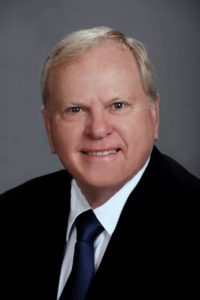
Dan is President and CEO at California Commercial Advisers, Inc. He consults on subjects of Business Growth & Private Money. Dan often creates articles interrelated to these subjects. He has been active in the real estate and financial services industry since 1972 & possesses a lifetime teaching credential for secondary and adult education. He has taught over 350 educational seminars on subjects related to real estate lending, private money lending & loan underwriting for commercial/industrial properties.
Contact Dan Today
Mobile: 949.533.8315
Email: [email protected]
Learn live and in real-time with Realty411. Be sure to register for our next virtual and in-person events. For all the details, please visit Realty411Expo.com or our Eventbrite landing page, CLICK HERE.